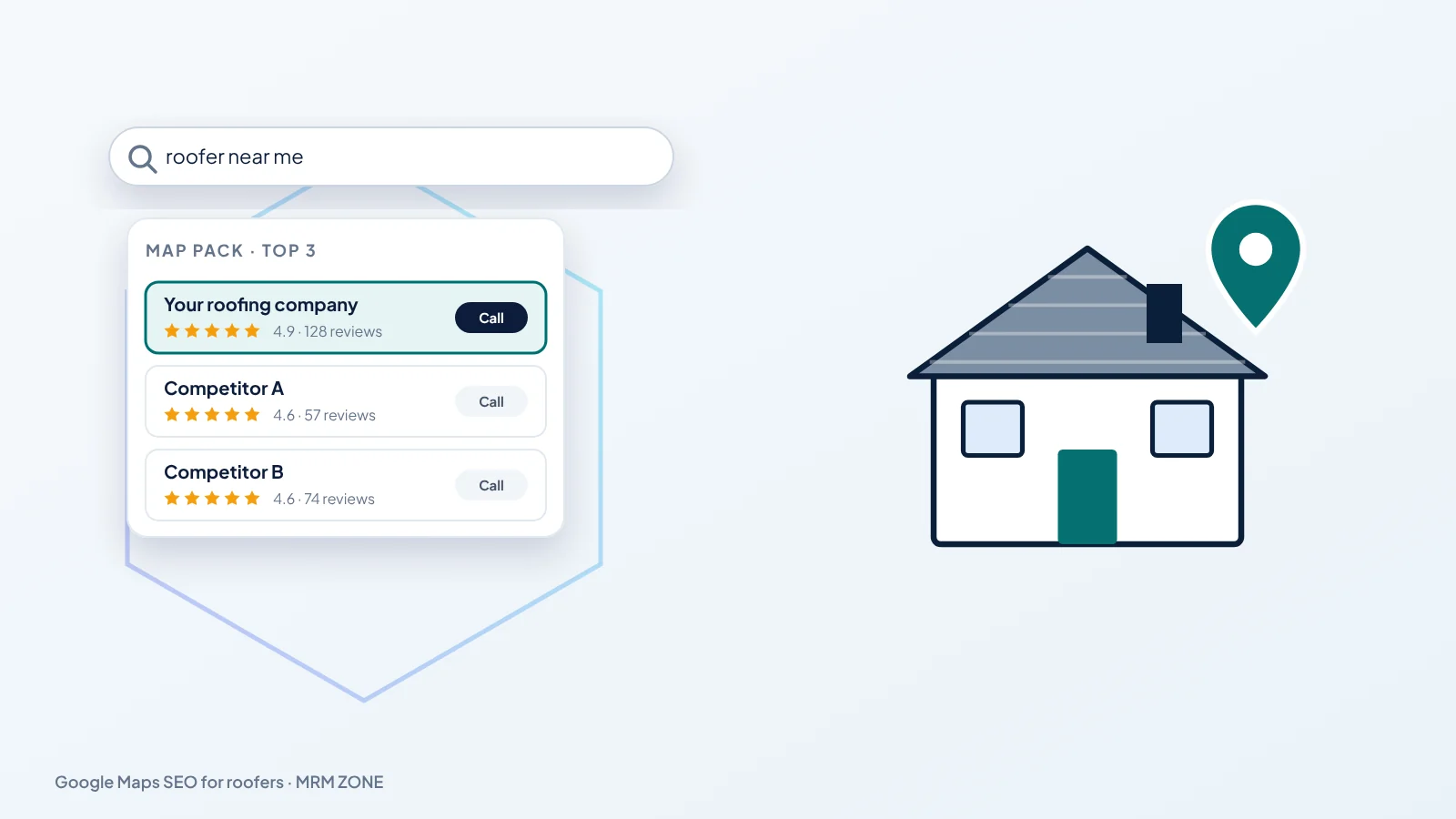
Google Maps SEO: what decides who gets into the top three
In its guide Tips to improve your local ranking on Google, Google says the map pack is ranked on three things: relevance (does the profile match the search), distance (how close the business is to the searcher or the place they typed) and prominence (how well known the business is, measured largely by reviews, links and mentions). You cannot move your base, but you can improve the other two a great deal. Everything below feeds one of them.
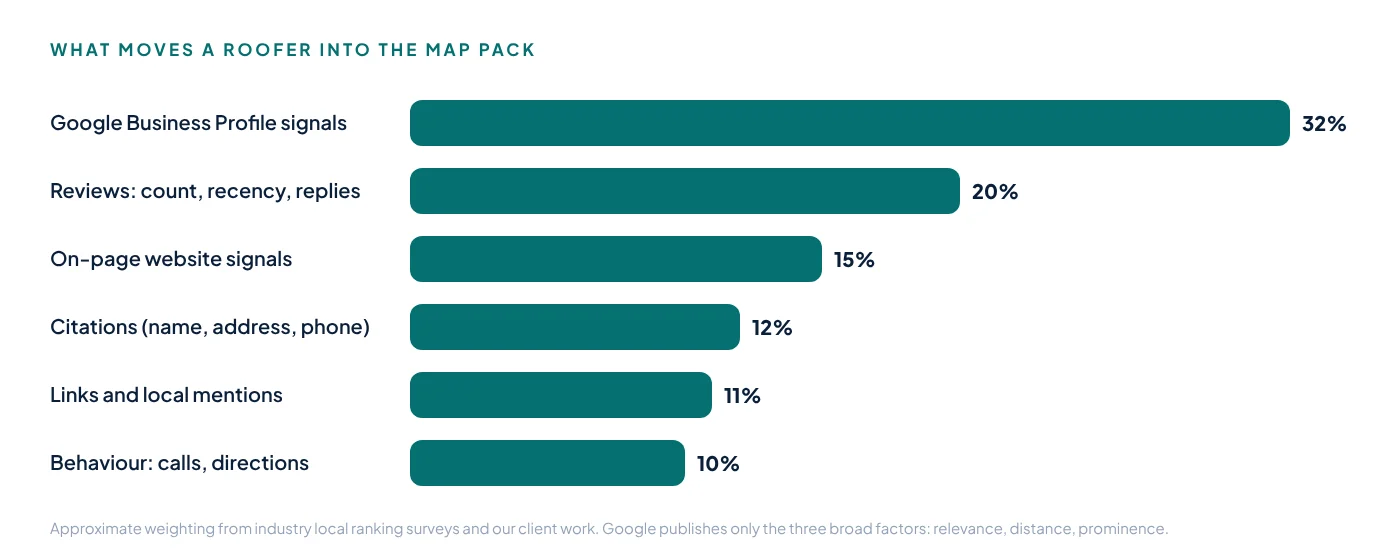
Get the profile basics exactly right
Use your real business name, with no added keywords, because Google suspends profiles for that. Set Roofing contractor as the primary category. Fill in the service list with real services and a short description of each. Set opening hours you actually answer the phone in, and the service area you really cover. Add the website link to the page that matches the profile, usually the homepage or the main roofing page, and make sure the phone number on the profile, the website and every directory is identical.
Reviews: volume, recency and replies
The roofer with 80 reviews and three new ones this month will usually beat the roofer with 120 reviews and none since last year. Ask on the day the job finishes, send a direct link, and reply to every review within a few days. Mention the service and suburb in the reply when it is natural (thanks for trusting us with the Colorbond re-roof in Ipswich). Our review routine covers what Google forbids, including incentives and review gating.
Photos and posts keep the profile alive
Upload real job photos, before and after, with the roof type visible. Profiles with regular new photos get more views and more direction requests. Use Google Posts once a week or two: a finished job, a seasonal offer, a storm-season reminder. None of this is complicated; the gain comes from doing it consistently when competitors do not.
The website still matters for the map pack
Google reads your website to understand what the profile is about. A site with a clear roofing page, service pages, area pages and RoofingContractor schema gives Google confidence to show you for more searches. Slow or thin sites hold the profile back. Our local SEO checklist for roofers lists the website work in order.
Mistakes that get roofing profiles suspended
A suspended profile disappears from the map entirely, and reinstatement can take weeks. The common causes in roofing are avoidable:
- Keywords stuffed into the business name, such as Smith Roofing – Roof Repairs Dublin Best Roofer.
- A virtual office, PO box or shared desk used as the address.
- Several profiles for the same business, often created by different agencies over the years.
- Changing the name, address and category many times in a short period.
- Fake reviews, or reviews written by staff and family.
If you work from home, set the profile up as a service-area business and hide the address rather than inventing a premises.
How to track map pack results
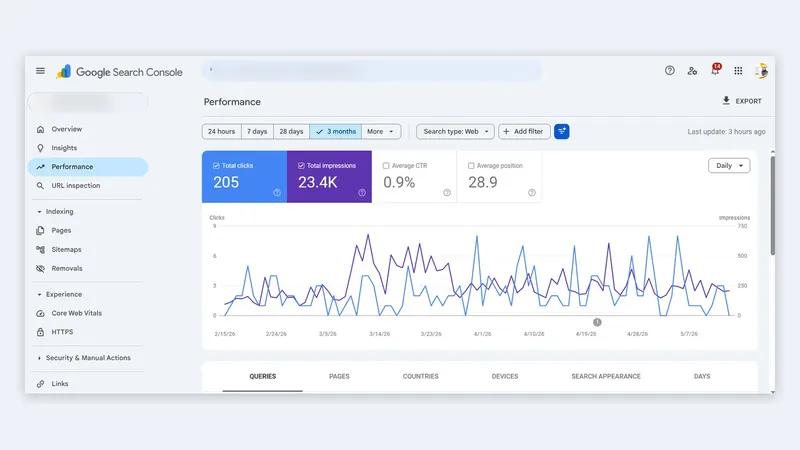
Your own phone is a poor guide, because Google personalises results by location. Better signals are in the profile itself: open the Performance view in your Business Profile and track calls, website clicks, direction requests and the searches people used to find you, month by month. In Search Console, filter for the page linked from the profile to see its clicks and impressions separately. If you want to see rankings across a whole area, a grid-based rank tracker shows how your position changes from suburb to suburb.
A monthly Google Maps SEO routine
Google Maps SEO is not a one-off setup. Roofers who stay in the top three tend to repeat the same small tasks every month:
- Ask every finished job for a review and reply to every new one.
- Upload five to ten new job photos with the roof type and area visible.
- Publish two or three Google Posts: a recent job, a seasonal reminder, a new service.
- Answer any new questions in the Q&A section, and add common questions yourself.
- Check that hours, services and holiday closures are up to date.
- Review the Performance numbers and note what changed.
None of these take long, but together they show Google an active, trusted business, and most competitors stop doing them after the first month.
Citations and local links
List the business on the main directories in your country (for Australia, Yellow Pages, TrueLocal, hipages and the industry associations; for the UK and Ireland, Checkatrade, TrustATrader, Golden Pages and the trade bodies). Keep the name, address and phone identical everywhere. A few local links, from a supplier, a sponsorship or a local news mention, add prominence that directories alone do not.
Want us to run this for you? See local SEO and Google Business Profile management.
Related articles
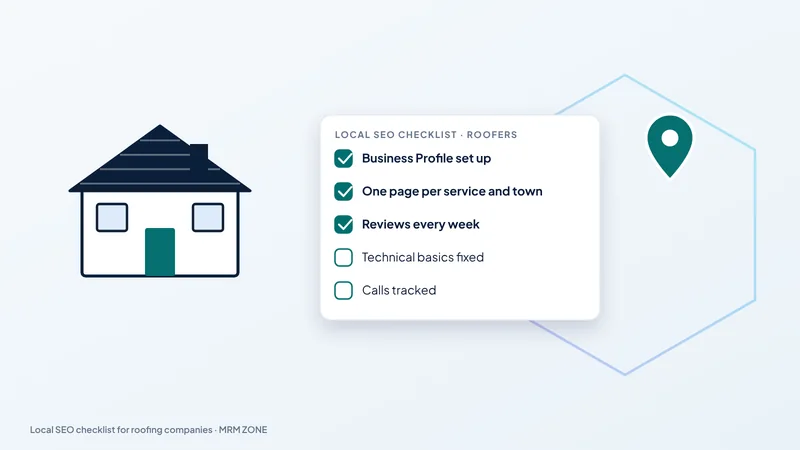 A local SEO checklist for roofing companiesA practical local SEO checklist for roofers: Business Profile, town pages, reviews, citations and tracking, in…
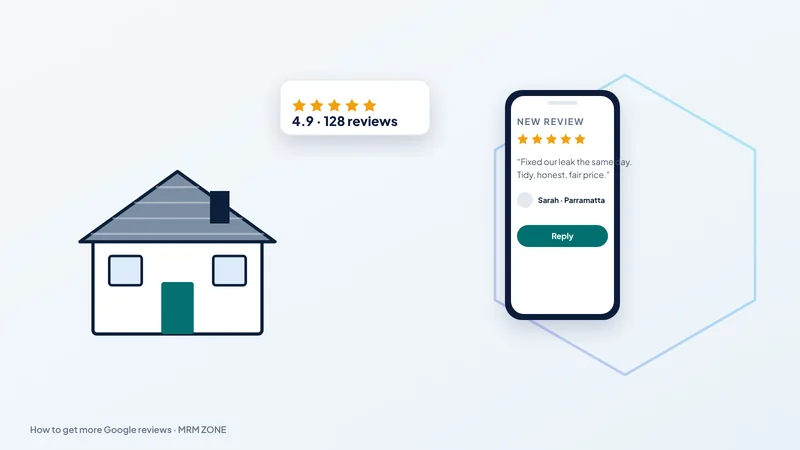 How to get more Google reviews for your service businessA simple routine for getting more Google reviews for a trade or service business, what Google's policies forbi…
 Roofing SEO Ireland: how Irish roofers get more calls from GoogleRoofing SEO Ireland guide: county and town pages, Google Business Profile, reviews, storm-season searches and …
Want us to check this on your own site? Ask for a free audit and we'll send the first fixes we'd make.